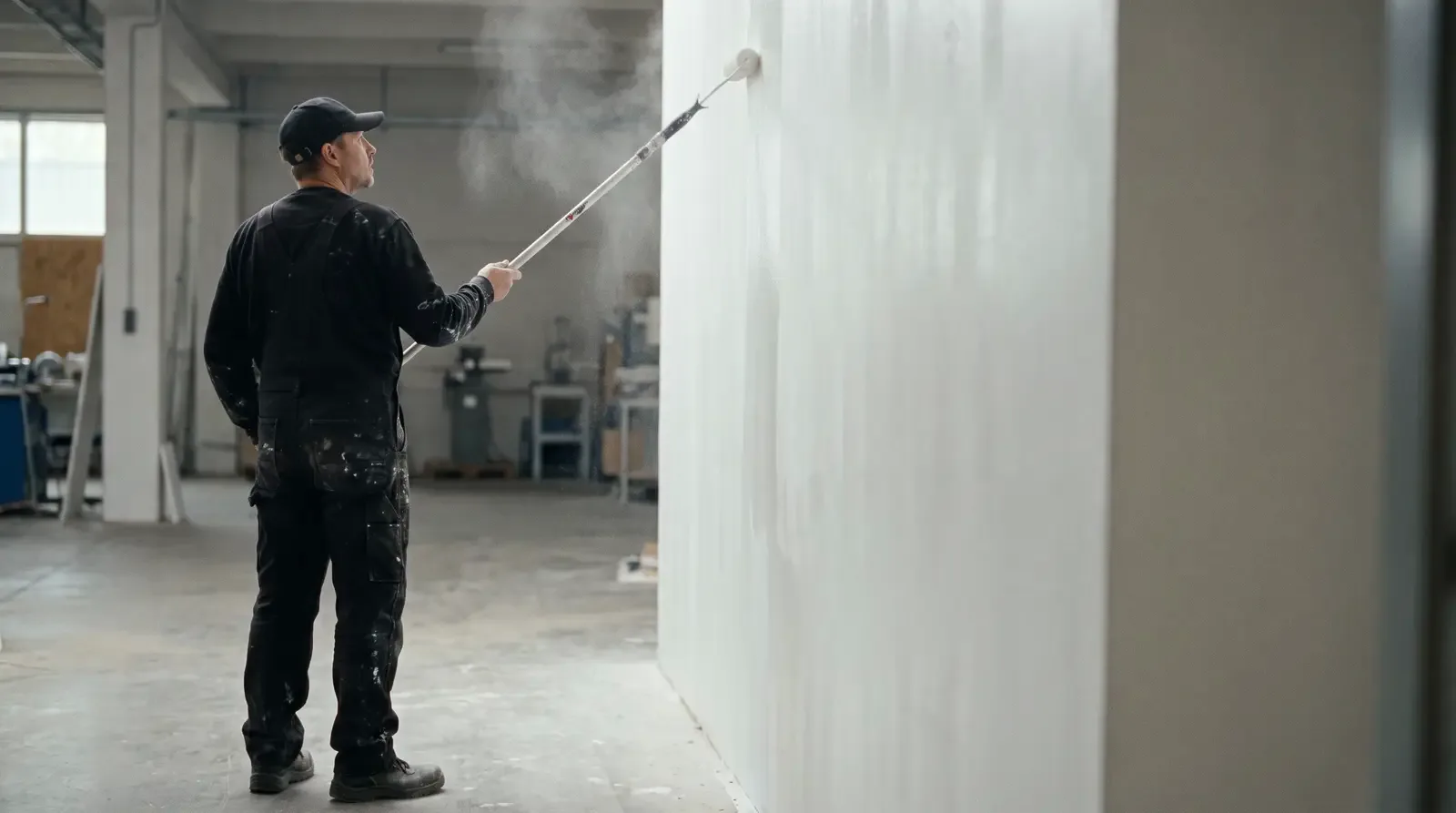
News · Guide
Q2, Q3 or Q4? Surface quality levels explained
Whether a wall stays smooth in grazing light is decided at the filling stage. The quality levels Q1 to Q4 make the result comparable, once you know what they mean.
Why quality levels exist
"Smooth" is not a measurable specification. That is why four quality levels have become the standard in drywall: they describe how far joints, screw heads and surfaces are worked. They belong in the offer and make comparable what is handed over in the end.
The four levels
- Q1, the basic filling: Joints filled, fixings covered. Enough when tiles or panels go on top and looks do not matter.
- Q2, the standard: Joints and screw heads filled again and sanded. The basis for textured wallpaper and structured coatings.
- Q3, the high-grade standard: The joint is additionally drawn out wider and the board surface pore-filled. For fine plasters and matt paints.
- Q4, the full-surface filling: The entire wall is skimmed and sanded. Mandatory for grazing light, gloss paints, glazes and high-quality smooth wallpapers.
Which level do you really need?
The honest answer: it depends on light and coating. A windowless hallway wall forgives Q2. A long living-room wall with evening light running along it shows every joint at Q2, there Q4 pays off. If in doubt, check the critical surfaces at low sun or with a torch held flat against the wall.
The most common mistake
Surface quality often only becomes a topic at painting stage, when it is most expensive. Better: define the level per room before commissioning and write it into the offer. Serious fit-out companies name the Q level on their own, including the surfaces for which they recommend Q4.