News · Guide
Refurbishing an occupied building: what really matters
Most Berlin refurbishments happen in buildings where people live. Keeping the house at peace is not luck, it is planning.
The four points of conflict and how to defuse them
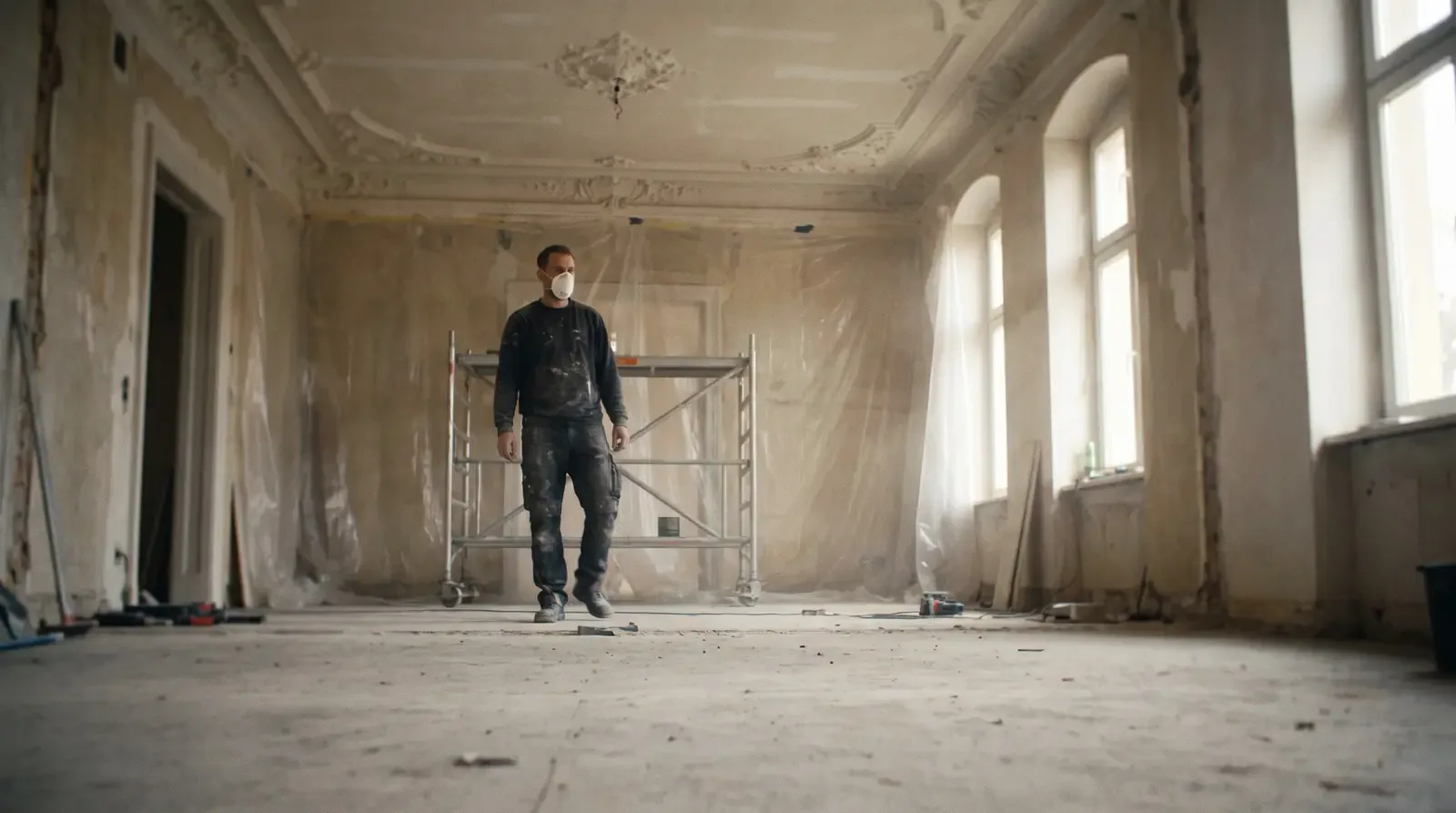
- Dust: Dust protection walls with zip doors, covered floors and low-dust machines belong in every offer, not in the "on request" category.
- Noise and working hours: Loud works belong announced and in reliable time windows. Whoever informs the neighbours up front gets patience instead of complaints.
- Communal areas: Stairwell and lift need protection before the first material is carried through. Broom-clean is the daily standard, not the project finale.
- Hidden damage: Surprises wait behind period walls. What matters is the rule for them: document, quote transparently, commission only after approval.
Questions to ask before commissioning
How will the apartment be sealed off from the rest of the house? Who informs the neighbours and when? What happens when something turns up behind the wall that is not in the offer? And: who is the one number to call during construction? The answers show whether a company is really used to occupied buildings.
What stays realistic
A refurbishment in an occupied building remains a construction site: there are days with noise and restrictions, with bathrooms also times without a shower. Serious is not whoever promises that away, but whoever names it up front and plans the sequence so the uncomfortable phases stay short and predictable.
Period buildings deserve respect
Stucco, floorboards and high ceilings are the reason Berlin period buildings are so sought after. Good refurbishment protects what should stay and renews what has had its time, in that order.